Six weeks a year, and then it is over
Guchhi cannot be farmed. Everything else about this business follows from that one inconvenient fact.
01Our Journey
It started as a favour, not a business
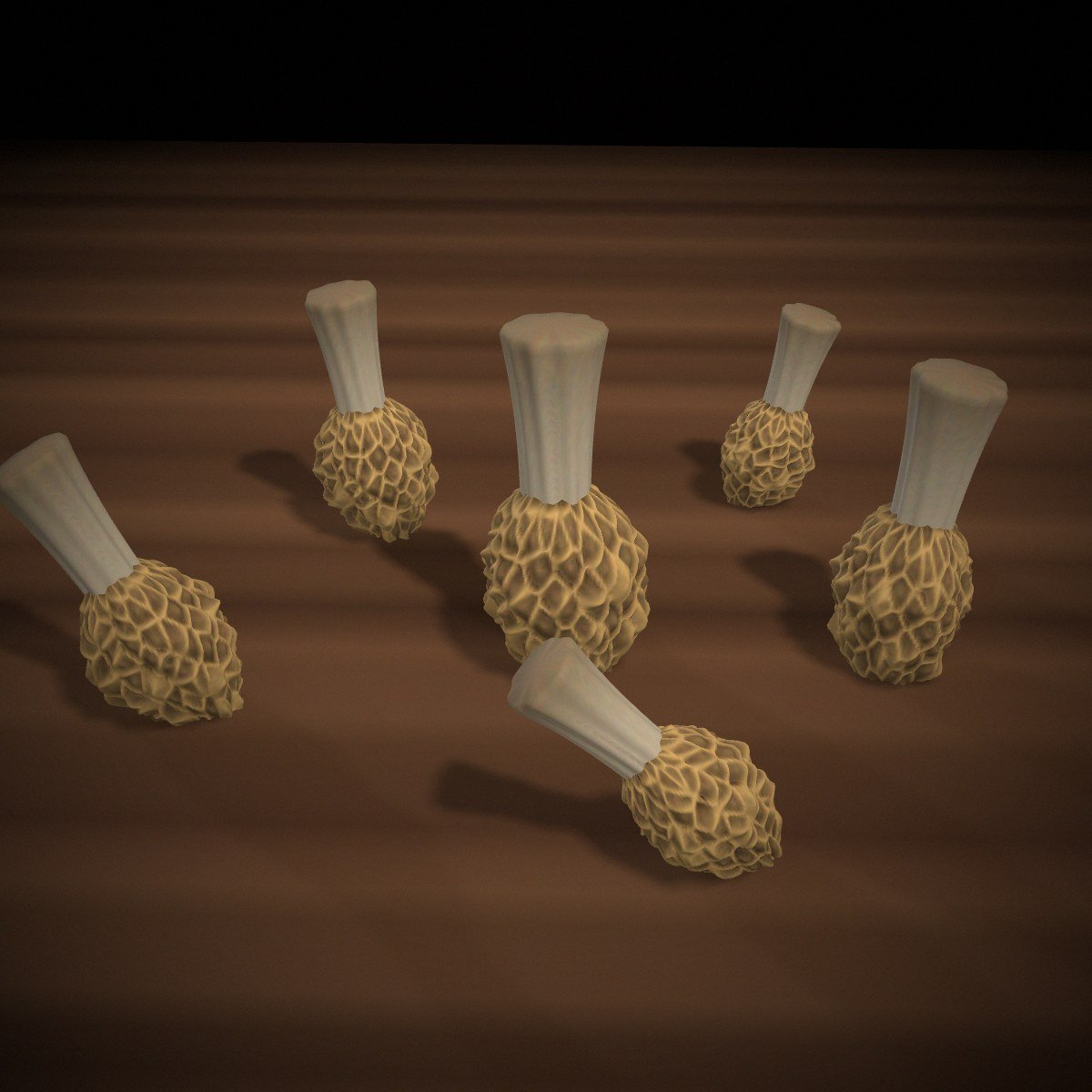
Anshu Sood was buying guchhi for his own kitchen — a kilo at a time, from a contact in Kullu — and giving most of it away. Friends kept asking where it came from, because what they could buy in Delhi did not taste like it and, often enough, was not even the same species.
That gap is the whole reason Guchhi exists. Morels are one of the most counterfeited ingredients in Indian retail: cultivated mushrooms are dyed, dried, and sold at morel prices to people who have no way of telling the difference. Meanwhile the families who actually walk the slopes were being paid a fraction of what the mushroom fetched three hands later.
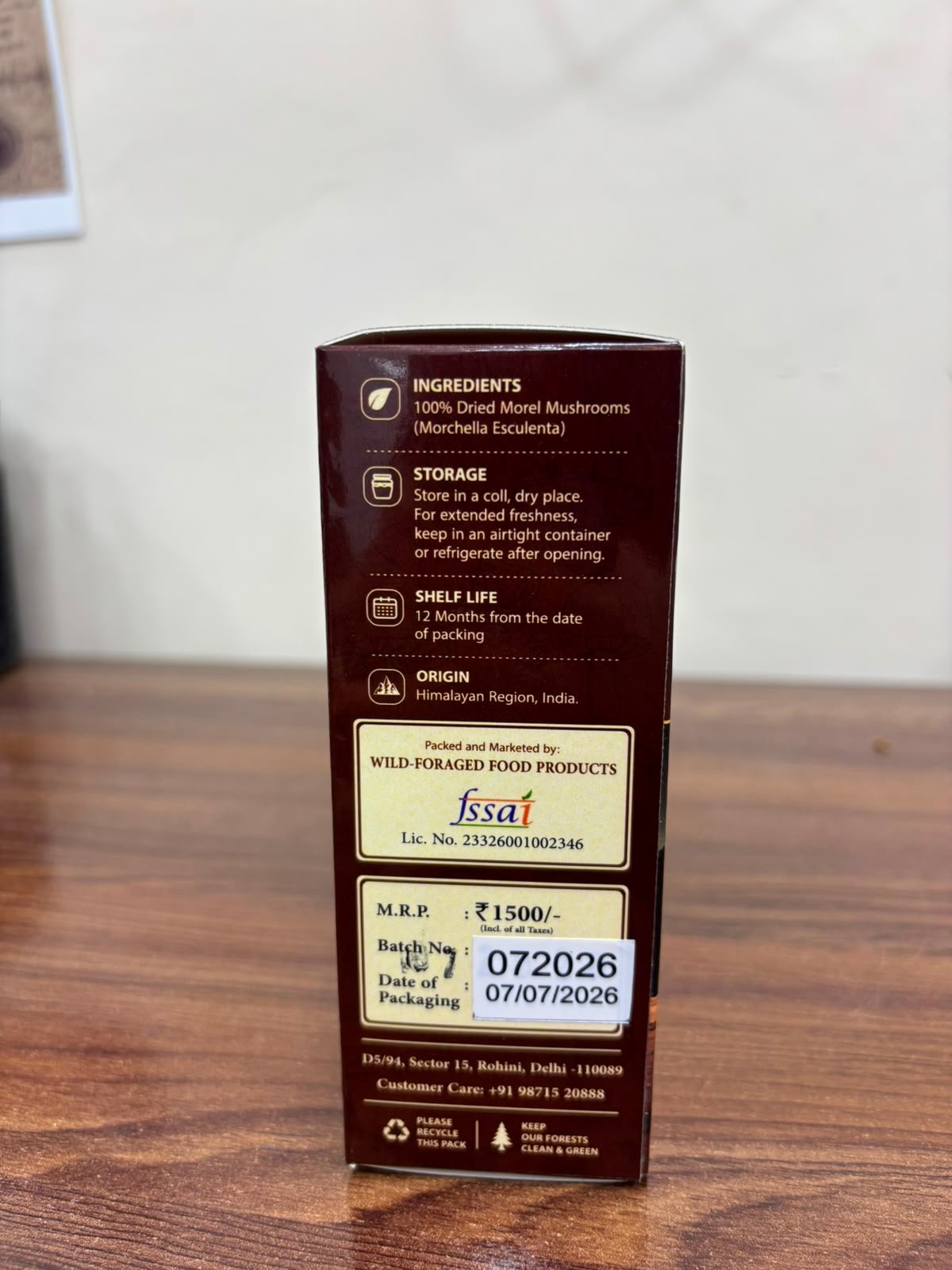
So we shortened the chain until we could name every person in it. We buy from the foragers, we grade it ourselves, and we put the batch number on the box so you can ask us exactly which season and which valley you are holding.
02The Himalayan Connection
The people who find it
Nobody stumbles onto guchhi. Foragers read the ground — the aspect of a slope, how long the snow has sat on it, whether a fire came through two summers ago. It is knowledge that gets handed down, not taught, and it is the actual scarce resource here. The mushroom is just the part you can sell.
Our people work the deodar and blue-pine floor of Kullu, the oak belt above Shimla, and the steep dryland plots around Bharmour in Chamba. Most are smallholders for whom the foraging weeks are a meaningful part of the year's income — which is exactly why the price we pay matters more than any certificate we could print.
We pay on collection, in full, at a rate we publish to them before the season opens. If the season is thin, we buy less and say so. We do not quietly make up the shortfall with someone else's mushrooms.
03Mission & Vision
Get the real thing into ordinary kitchens
Our mission is to bring authentic Himalayan produce to modern households without the theatre — no invented heritage, no vague "organic" claim doing the work that a supply chain should be doing. One ingredient, named honestly, traceable to a valley and a season.
Our vision is to become India's most trusted Himalayan foods brand, and we think trust is boring and specific: consistent grading, honest weights, a batch number you can call us about, and the discipline to run out rather than adulterate.
Say what it is
Species, origin, weight, batch, date. If we cannot verify it, it does not go on the box.
Pay the person who found it
Direct purchase, published rates, paid on collection. The forager is not the cheapest line item.
Run out gracefully
A short season means a short supply. We would rather sell nothing than sell a substitute.
Leave the forest able to do it again
Cut, never uproot. Buy inside a quota. The mycelium is the asset, not the mushroom.
04Sustainability
The mushroom is the fruit, not the organism
What you buy is the fruiting body. The organism — the mycelium — is a network in the soil that may be decades old and will fruit again next spring if it is left intact. Pull a morel out by the base and you tear that network. Cut it at the stem and you do not.
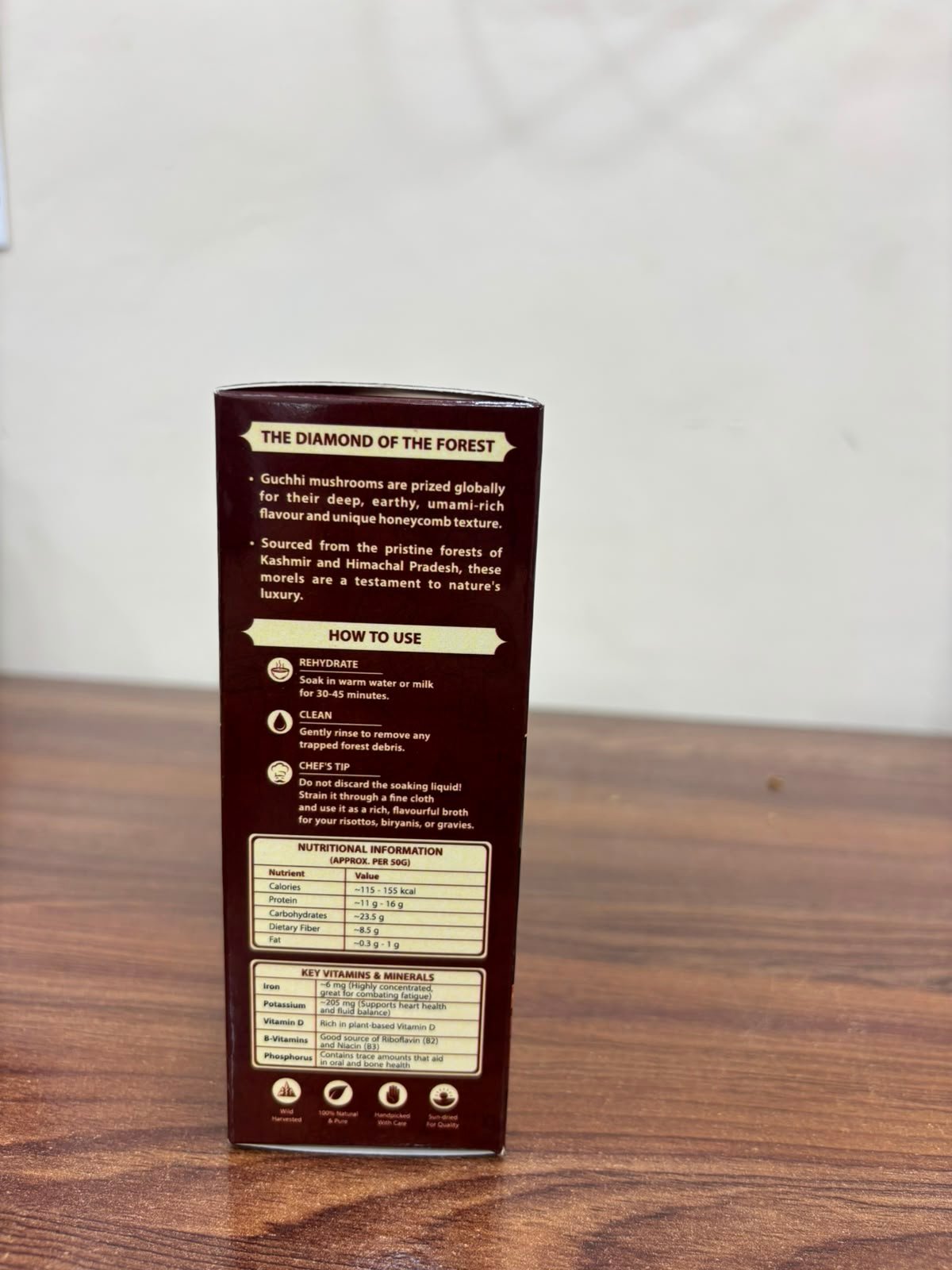
So: cut, never uproot. Carry in mesh, not plastic, so spores drop on the way down. Leave the immature caps. And buy within a quota that a given patch can carry, which in practice means we turn volume away every single season.
Drying is done in the sun over four to six days. It is slower than a kiln and it ties up more space, but it does not cook off the aromatics that are the entire point of the ingredient. The pack itself is recyclable board, and we ask you to recycle it — it says so on the bottom.
- Cut, never uprooted
- Mesh baskets — spores drop on the walk down
- Immature caps left standing
- Volume capped per patch, per season
- Sun-dried, 4–6 days
- Recyclable board pack
Come and taste the argument.
Everything above is just words until you have soaked fifty grams and tasted what comes out of the bowl.